
ISO 14001 2015 & ISO 45001 2018 Integrated Management System (HSE) - Awareness Course

Instructor
QGLOBAL ACADEMY
1,346
Students
enrolled
- Description
- Curriculum

ISO 14001 2015 environmental management systems (EMS) specify the requirements for an environmental management system that an organization can use to enhance its environmental performance. ISO 14001 is intended for use by an organization seeking to manage its environmental responsibilities in a systematic manner that contributes to the environmental pillar of sustainability. ISO 14001 helps an organization achieve the intended outcomes of its environmental management system, which provides value for the environment, the organization itself and interested parties. ISO 14001 is applicable to any organization, regardless of size, type and nature, and applies to the environmental aspects of its activities, products and services that the organization determines it can either control or influence considering a life cycle perspective. ISO 14001 can be used in whole or in part to systematically improve environmental management. Claims of conformity to ISO 14001, however, are not acceptable unless all its requirements are incorporated into an organization’s environmental management system and fulfilled without exclusion. ISO 45001 2018 occupational health and safety management systems will help organizations to improve employee safety, reduce workplace risks and create better, safer working conditions. By implementing ISO 45001 standards, the burden of occupational injuries and diseases such as losses from early retirements, staff absence and rising insurance premiums can be significantly reduced. ISO 45001 takes into account other International Standards in this area such as the International labour organization’s ILO-OSH Guidelines, various national standards and the ILO’s international labour standards and conventions. ISO 45001 is applicable to all organizations, regardless of size, industry or nature of business. It is designed to be integrated into an organization’s existing management processes. This awareness course on an integrated management system based on ISO 14001 2015 and ISO 45001 2018 standards teaches you the process approach, health, safety and environmental (HSE) management system principles and the requirements and benefits of ISO 14001 2015 and ISO 45001 2018 standards. The essential objective of this course is to create awareness for participants regarding various basic requirements of these HSE management system standards & impart working knowledge on how these requirements can be interpreted to suit the organization’s processes, products, people & customers.
Who Should Attend?
- Anyone involved in the planning, implementing, maintaining, supervising or auditing of an ISO 14001 2015 environmental management system and ISO 45001 2018 occupational health and safety management system
- Jobseekers interested in understanding the environmental and occupational health and safety management practices followed by various organisations
- Anyone looking to gain skills and knowledge to improve their career performance
Key Benefits
- Understand the structure of ISO 14001 2015 and ISO 45001 2018 standards
- Learn importance and benefits of an ISO 14001 2015 environmental management system and ISO 45001 2018 occupational health and safety management system
- Understand key requirements, terms and definitions of ISO 14001 2015 and ISO 45001 2018 standards
- Main concepts such as risk-based thinking, process approach, Plan-Do-Check-Act Prepare yourself to participate in the implementation process of ISO 14001 2015 and ISO 45001 2018 standards
- Understand the method of managing occupational health and safety hazards, its risks and implement control measures
- Manage health and safety and drive continual improvement
- Understand the best practices to be applied to manage the environmental aspects of a product throughout its lifecycle
- Take steps to ensure that health and safety is at the heart of your organization
- Attract and retain customers by meeting their current and future needs better
- Learn techniques to create and manage documents and records relevant to HSE management system , critical to the products and services delivered and those required to meet customer and regulatory requirements
- Fill gaps in your professional knowledge
Learning & Evaluation Method
This is a self learning course. Study materials will be available in your account once you purchase the course. If you need a live and interactive course, you can opt for ‘ BUY FOR A GROUP ‘ option. Live course will have role plays, online workshops, practice questions and group discussions during the course so that each participant will gain in depth knowledge in the subject. Group purchase can be made for a single participant or for a group of participants. On receiving your order, our team will contact you to schedule a live training session as per your convenience. After the completion of this course you can participate in the online examination if you wish to test your knowledge . Those securing minimum 50% marks will pass the exam. You will be allowed to retake the exam. Attending the exam is not mandatory to receive a course completion certificate.
Certification
There are increasing numbers of organizations, who prefer candidates those who have completed management system trainings from a recognized institution. Certification demonstrates your commitment to superior professionalism, upholding industry standards, and continued learning. These merits can help boost your professional credibility and prestige within your own network, in your organisation, with your current clients, and when pursuing new business opportunities. After the successful completion of the course and final exam, you will be awarded with a certificate of completion issued by QGlobal. Your credentials will be made available in the global online directory and can be verified by anyone searching with the certificate number. Without doubt we can say that our training courses are well recognized and sought after by organizations across various geographies.
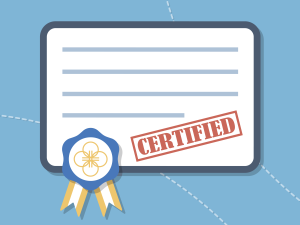
Sample Certificate

Buy for group Are you planning to buy this course for a group? We have the best prices for you! Select ‘Buy for Group’ option and add to the cart. You will get a discount of 60 – 75% for a group of up to 10 participants. To make a group purchase, create your group name and add individual emails of up to 10 participants. Each participant will get the access to the course materials, exam and the certificate. We will arrange one live-online session for the entire group.
Total: 209 Courses View all



All industries
[/vc_column][/vc_row]
$240
$190



[/vc_column][/vc_row]
$240
$190


[/vc_column][/vc_row]
$350
$290

[/vc_column][/vc_row]
$240
$190



[/vc_column][/vc_row]
$240
$130


[/vc_column][/vc_row]
$240
$190

[/vc_column][/vc_row]
$240
$190






All industries
[/vc_column][/vc_row]
$240
$190


All industries
[/vc_column][/vc_row]
$240
$190

Special

All industries
[/vc_column][/vc_row]
$240
$190

[/vc_column][/vc_row]
$240
$190

[/vc_column][/vc_row]
$240
$190



Aerospace Quality
[/vc_column][/vc_row]
$240
$190

[/vc_column][/vc_row]
$240
$190

[/vc_column][/vc_row]
$240
$190

[/vc_column][/vc_row]
$240
$190



[/vc_column][/vc_row]
$240
$190

[/vc_column][/vc_row]
$350
$290

Biotechnology





Aerospace Quality
[/vc_column][/vc_row]
$240
$130
Total: 209 Courses View all


[/vc_column][/vc_row]
$120
$99

[/vc_column][/vc_row]
$240
$190



All industries
[/vc_column][/vc_row]
$120
$99

Special

Agriculture




All industries
[/vc_column][/vc_row]
$350
$290

[/vc_column][/vc_row]
$240
$190

[/vc_column][/vc_row]
$240
$190

Aerospace Quality
[/vc_column][/vc_row]
$120
$99


Hot

Agriculture



Special

[/vc_column][/vc_row]
$450
$390
Special
Agriculture
[/vc_column][/vc_row]
$240
$190
Special

[/vc_column][/vc_row]
$120
$99
Hot
[/vc_column][/vc_row]
$120
$99
New

[/vc_column][/vc_row]
$120
$99
Special

[/vc_column][/vc_row]
$120
$99

All industries
[/vc_column][/vc_row]
$120
$99
New

All industries
[/vc_column][/vc_row]
$120
$99
Hot

All industries
[/vc_column][/vc_row]
$120
$99
Hot

All industries
[/vc_column][/vc_row]
$120
$99
Awareness training on ISO 14001 2015 & ISO 45001 2018 standards
-
1
 Introduction to standards and certification
- Purpose of standardization
- Benefits of certification
-
2Introduction to ISO 14001 2015 & 45001 2018 standards
ISO 14001 2015 Environmental management system
ISO 14001 2015 environmental management systems (EMS) specify the requirements for an environmental management system that an organization can use to enhance its environmental performance. ISO 14001 is intended for use by an organization seeking to manage its environmental responsibilities in a systematic manner that contributes to the environmental pillar of sustainability. ISO 14001 helps an organization achieve the intended outcomes of its environmental management system, which provide value for the environment, the organization itself and interested parties.
ISO 14001 is applicable to any organization, regardless of size, type and nature, and applies to the environmental aspects of its activities, products and services that the organization determines it can either control or influence considering a life cycle perspective. ISO 14001 can be used in whole or in part to systematically improve environmental management system.
ISO 45001 2018 Occupational health and safety management system
ISO 45001 2018 occupational health and safety management systems also known as EMS and OH&SMS will help organizations to improve employee safety, reduce workplace risks and create better, safer working conditions. By implementing ISO 45001 standards, the burden of occupational injuries and diseases such as losses from early retirements, staff absence and rising insurance premiums can be significantly reduced. ISO 45001 takes into account other International Standards in this area such as the international labour organization's ILO-OSH Guidelines, various national standards and the ILO's international labour standards and conventions. ISO 45001 is applicable to all organizations, regardless of size, industry or nature of business. It is designed to be integrated into an organization’s existing management processes.
environmental and health and safety management system (IMS)
An IMS integrates all of an organization’s systems and processes into one complete framework. This allows an organization to work as a single unit with unified objectives. Most organizations focus on management systems individually, in silos and sometimes even in conflict.
With the IMS, the different branches of an organization will work together, with each function aligned behind a single goal of improving the performance of the entire organization in regards to different management systems. When an organization is able to accomplish this, they will have a coordinated effort which is greater than the sum of its parts and is not only more efficient but more effective. IMS provides a clear, uniform image of the entire organization, how they impact each other and the associated risks. Efficiency is gained from less duplication, and it becomes easier to adopt new systems in the future.
The benefits of an environmental & occupational health and safety management system
An IMS can benefit an organization because of its increase in efficiency and effectiveness. An IMS also reduces cost and minimizes the disruption caused by several external audits. Also, it shows the organization’s commitment to increased performance, employee and customer satisfaction and continuous improvement.
Contrary to many other types of standards, management system standards cover multiple aspects, levels, and functions of an organization and, therefore, practicing these standards can have a substantial impact on how an organization operates and manages business processes. Moreover, organizations are applying to not just one, but to many management system standards to satisfy their own needs as well as those of external stakeholders.
Management systems based on ISO 14001 and ISO 45001, ISO 14001 and ISO 45001 standards can be integrated to create an environmental & occupational health and safety management system. The clauses from all three standards can be integrated as given below.
Benefits of ISO 45001 2018 Occupational health and safety management systems
ISO 45001 standard for occupational health and safety (OH&S) management systems is designed to help organizations proactively create a safer and healthier workplace. By implementing ISO 45001 standard, businesses can prevent work-related injuries and illnesses, systematically manage risks, and ensure the well-being of their employees.
Key benefits of implementing ISO 45001 Occupational health and safety management system are:
a. Proactive risk management: The standard provides a framework for ongoing hazard identification, risk assessment, and implementing controls, which reduces the likelihood of accidents and incidents.
b. Reduced injuries and ill health: By systematically improving safety protocols, organizations can significantly decrease the number of workplace injuries, illnesses, and fatalities.
c. Enhanced safety culture: The standard promotes a culture of safety where employees are actively involved in safety processes, risk identification, and decision-making. This involvement improves morale and accountability.
d. Increased awareness: Implementation of ISO 45001 raises awareness of occupational health and safety risks among all personnel, leading to better compliance and more careful work practices.
e. Improved employee well-being: A safer and healthier workplace improves overall employee well-being, which leads to higher morale and job satisfaction.
f. Reduced costs: A proactive approach to safety leads to a decrease in costs related to workplace incidents, such as medical expenses, legal fees, compensation claims, and insurance premiums.
g. Increased productivity: Fewer incidents, illnesses, and days lost due to injuries result in less downtime and improved operational efficiency. A workforce that feels safe and valued also tends to be more motivated and productive.
h. Improved management system: The standard helps create a more efficient and effective OH&S management system, allowing for better control over policies, processes, and practices.
i. Easier integration: Because ISO 45001 is based on the same high-level structure as other ISO standards (like ISO 14001 and ISO 45001 and ISO 14001), it can be easily integrated into an organization's existing management systems.
j. Regulatory compliance: ISO 45001 helps organizations stay up-to-date with relevant health and safety laws and regulations, minimizing the risk of fines and legal action. It provides documented proof of a structured safety system, which can be important for legal due diligence.
k. Enhanced brand reputation: Certification demonstrates an organization's commitment to protecting its employees, building trust with clients, investors, and the public. This social responsibility improves the corporate image and reputation.
l. Competitive advantage: Many customers and partners prefer to work with ISO 45001-certified suppliers, giving certified organizations a competitive edge in tenders and bids, especially in global markets.
m. Stronger stakeholder confidence: By providing a safer and healthier work environment, an organization builds stronger relationships and greater confidence with all interested parties, including employees, customers, suppliers, and regulators.
Benefits of ISO 14001 Environmental management system
ISO 14001 provides a framework for organizations to manage their environmental responsibilities systematically. The benefits of implementing this standard extend to a company's environmental performance, legal compliance, and overall business operations.
Key benefits of ISO 14001:2015 Environmental management system are:
a. Reduced environmental impact: Organizations can effectively identify, control, and lessen their impact on the environment, including their carbon footprint, emissions, and water usage.
b. Improved resource efficiency: The standard helps organizations optimize their use of materials, energy, and water, leading to less waste and consumption.
c. Waste reduction: ISO 14001 provides a structure for minimizing waste generation and developing better recycling and waste management practices.
d. Pollution prevention: Companies can proactively identify and mitigate potential sources of pollution, preventing incidents that could harm the environment.
e. Long-term sustainability: By encouraging a continuous improvement model, the standard helps organizations integrate sustainability into their core business processes, building long-term ecological balance.
f. Regulatory compliance: ISO 14001 provides a framework for understanding and complying with relevant environmental laws and regulations, which helps avoid fines and legal actions.
g. Cost savings: Improved resource efficiency, reduced waste, and better energy management lead to significant cost reductions in operational expenses.
h. Risk management: A proactive approach to environmental risk helps organizations manage liabilities, prevent incidents, and ensure business continuity.
i. Reduced insurance costs: By demonstrating effective risk management, certified organizations may qualify for reduced public liability and insurance costs.
j. Enhanced market opportunities: Many customers and large corporations prefer to work with ISO 14001-certified partners, giving certified organizations a competitive and financial advantage.
k. Enhanced corporate image and credibility: Certification signals a company's commitment to environmental stewardship, which can attract environmentally conscious customers and investors.
l. Improved stakeholder relations: The standard fosters engagement and communication with stakeholders, including customers, investors, and regulators, building trust and transparency.
m. Increased employee engagement: Involving employees in environmental goals can boost morale, engagement, and retention, as staff feel a sense of pride in working for a responsible company.
n. Continuous improvement: ISO 14001 is based on the Plan-Do-Check-Act (PDCA) cycle, which helps organizations consistently monitor and enhance their environmental performance over time.
o. Simplified supplier management: The standard encourages better environmental performance from suppliers, promoting more sustainable practices throughout the supply chain.
ISO 14001 and ISO 45001 Clauses
ISO 14001 and ISO 45001 standard has the following clauses to which the organisation shall ensure compliance to.
1. Scope
2. Normative references
3. Terms and definitions
4. Context of the organization
4.1. Understanding the organization and its context
4.2. Understanding the needs and expectations of interested parties
4.3. Determining the scope of the environmental and health and safety management system
4.4. Environmental and health and safety management system
5. Leadership
5.1. Leadership and commitment
5.2. Policy
5.3. Organizational roles, responsibilities and authorities
5.4. Consultation and participation of workers
6. Planning
6.1. Actions to address risks and opportunities
6.1.1. General
6.1.2. Environmental aspects, hazard identification and assessment of risks and opportunities
6.1.3. Compliance obligations, determination of legal requirements and other requirements
6.1.4. Planning action
6.2. Environmental and health and safety objectives and planning to achieve them
7. Support
7.1. Resources
7.2. Competence
7.3. Awareness
7.4. Communication
7.5. Documented information
8. Operation
8.1. Operational planning and control
8.1.1. General
8.1.2. Eliminating hazards and reducing OH&S risks
8.1.3. Management of change
8.1.4. Procurement
8.2. Emergency preparedness and response
9. Performance evaluation
9.1. Monitoring, measurement, analysis and evaluation
9.2. Internal audit
9.3. Management review
10. Improvement
10.1. Nonconformity and corrective action
10.2. Continual improvement
In ISO 14001 and ISO 45001 standard, the following verbal forms are used:
· “shall” indicates a requirement;
· “should” indicates a recommendation;
· “may” indicates a permission;
· “can” indicate a possibility or a capability.
ISO 14001 and ISO 45001 certification
The procedure for ISO certification involves several key phases, including preparing the organization's management system, undergoing internal and external audits, and maintaining continuous improvement after certification. It is important to note that the International Organization for Standardization (ISO) develops the standards but does not perform the certification itself; this is done by independent, accredited third-party bodies.
Phase 1: Preparation
Select the appropriate ISO standard.
Conduct a gap analysis: Compare the organization's existing processes and procedures against the requirements of ISO standard. This helps identify any areas that need to be addressed or improved.
Secure management commitment: Ensure that senior management is fully on board with the certification project and committed to providing the necessary resources.
Define the scope: Clearly outline the products, services, processes, and physical locations that will be included in the certification.
Phase 2: Documentation and implementation
Develop the management system: Create or update the organization's manuals, policies, and procedures based on the requirements of the ISO standard. This system serves as a documented framework for how the organization operates.
Implement the new system: Put the documented processes into practice. This requires training all relevant employees on the new procedures and ensuring they understand their roles and responsibilities.
Create an action plan: After reviewing the documentation, develop a plan to address any identified gaps. This could include training employees, purchasing new equipment, or updating existing processes.
Keep detailed records: Maintain records of all activities and outcomes. This evidence will be reviewed during the official audits to prove that the management system is functioning effectively.
Phase 3: Audits and certification
Perform an internal audit: Conduct a self-assessment to evaluate how well the management system is meeting the ISO standard's requirements. This allows to find and correct any issues before the external audit.
Conduct a management review: Top management must formally review the management system's performance at least annually. This review assesses the system's effectiveness and helps ensure continual improvement.
Select an accredited certification body: Choose a reputable, independent certification body that is recognized by an accreditation body (such as the International Accreditation Forum or the National Accreditation Board for Certification Bodies).
Undergo the external certification audit: The certification body will perform a two-stage audit:
Stage 1 (Document Review): The auditor reviews the management system documentation to ensure it complies with the ISO standard.
Stage 2 (Main Audit): The auditor assesses the implementation and effectiveness of the management system by observing operations, reviewing records, and interviewing employees.
Receive ISO certificate: If the organization successfully meets all requirements, the certification body will issue ISO certificate. It is typically valid for three years.
Phase 4: Maintenance and renewal
Pass surveillance audits: After achieving certification, the organization has to undergo regular, typically annual, surveillance audits to ensure ongoing compliance with the standard.
Focus on continual improvement: Use what is learned from internal and surveillance audits to make the processes better over time. This is a core principle of ISO standards.
Renew ISO certification: At the end of the three-year certification cycle, the certified organization needs to undergo a recertification audit to renew the ISO certificate.
Certification body
ISO certification is issued by independent, third-party organizations known as Certification Bodies (CBs) or registrars, not by the International Organization for Standardization (ISO) itself. These certification bodies are, in turn, authorized and monitored by an Accreditation Body (AB) to ensure they are competent and impartial.
Accreditation body
ISO 14001 and ISO 45001 certificate is issued to an organisation by an independent certification body after auditing its management system against the requirements of the standards. This certification body will be accredited with a national accreditation body who provides accreditation to issue the certificate.
International Accreditation Forum (IAF)
International accreditation forum provides accreditation for all accreditation bodies globally so that the certificate issued by certification body accredited them will be mutually recognized by all other member bodies.
Process approach
ISO 14001 and ISO 45001 standards promote the adoption of a process approach when developing, implementing and improving the effectiveness of an environmental and health and safety management system.
Understanding and managing interrelated processes as a system contributes to the organization's effectiveness and efficiency in achieving its intended results. This approach enables the organization to control the interrelationships and interdependencies among the processes of the system, so that the overall performance of the organization can be enhanced.
The process approach involves the systematic definition and management of processes, and their interactions, so as to achieve the intended results in accordance with the environmental and occupational health and safety and strategic direction of the organization. Management of the processes and the system as a whole can be achieved using the PDCA cycle with an overall focus on risk-based thinking aimed at taking advantage of opportunities and preventing undesirable results.
The application of the process approach in an environmental and health and safety management system enables:
· Understanding and consistency in meeting requirements;
· The consideration of processes in terms of added value;
· The achievement of effective process performance;
· Improvement of processes based on evaluation of data and information.
Plan-Do-Check-Act cycle (PDCA Cycle)
The PDCA cycle can be applied to all processes and to the environmental and health and safety management system as a whole.
The PDCA cycle can be briefly described as follows:
Plan: establish the objectives of the system and its processes, and the resources needed to deliver results in accordance with customers' requirements and the organization's policies, and identify and address risks and opportunities. Plan the competence and training requirements for personnel.
Do: implement what was planned.
Check: monitor and (where applicable) measure processes against policies, objectives, requirements and planned activities, and report the results.
Act: take actions to improve performance, as necessary.
Risk-based thinking
Risk-based thinking is essential for achieving an effective environmental and health and safety management system. The concept of risk-based thinking is carrying out preventive action to eliminate potential nonconformities, analysing any nonconformities that do occur, and taking action to prevent recurrence that is appropriate for the effects of the nonconformity.
To conform to the requirements of ISO 14001 and ISO 45001 standard, an organization needs to plan and implement actions to address risks and opportunities. Addressing both risks and opportunities establishes a basis for increasing the effectiveness of the environmental and health and safety management system, achieving improved results and preventing negative effects.
Opportunities can arise as a result of a situation favourable to achieving an intended result, for example, a set of circumstances that allow the organization to reduce waste or improve occupational health and safety. Actions to address opportunities can also include consideration of associated risks. Risk is the effect of uncertainty and any such uncertainty can have positive or negative effects. A positive deviation arising from a risk can provide an opportunity, but not all positive effects of risk result in opportunities.
-
3HSE 1445 Context of the organization
Understanding the organization and its context
Understanding the needs and expectations of workers and other interested parties
Determining the scope of the environmental , occupational health and safety management system
Environmental , occupational health and safety management system and its processes
-
4HSE 1445 Leadership and worker participation
Leadership and commitment
Environmental , occupational health and safety policy
Organizational roles, responsibilities and authorities
Consultation and participation of workers
-
5HSE 1445 Planning
Actions to address risks and opportunities
Environmental aspects
Compliance obligations
Planning action
Environmental, OH&S objectives and planning to achieve them
-
6HSE 1445 Support
Resources
Competence
Awareness
Communication
Documented information
-
7HSE 1445 Operation
Operational planning and control
Emergency preparedness and response
-
8HSE 1445 Performance evaluation
Monitoring, measurement, analysis and performance evaluation
Internal audit
Management review
-
9HSE 1445 Improvement
General
Incident, nonconformity and corrective action
Continual improvement
-
10EMS - Introduction to aspect impact analysis
-
11OHS - Introduction to hazard identification and risk analysis
-
12HSE - Chemical safety
-
13HSE - Equipment safety
-
14HSE - Electrical safety
-
15HSE - Handling fire emergency
-
16OHS - Confined space
-
17OHS - Working with tools
-
18OHS - Working at height
-
19HSE - Vehicle management
-
20HSE - Waste management
-
21HSE - Effluent management
-
22HSE - Air emissions
-
23HSE - Noise
-
24HSE - Safety of pressure vessels
-
25HSE - Storing and stacking
-
26HSE - Material handling
-
27HSE - Hot work
-
28EMS - Lifecycle perspective
-
29EMS - Minimizing resource consumption
-
30EMS - Identifying the environmental aspects


Course details
Duration
8 hr
Lectures
31
Quizzes
1
Level
Beginner
Popular courses