
ISO 55001 2024 Asset Management System - Lead Auditor Course

Instructor
QGLOBAL ACADEMY
436
Students
enrolled
- Description
- Curriculum

Assets come in all shapes and sizes, but one thing is for certain all organizations have assets. Assets can be a competitive advantage or can drain your organization’s resources. That’s why it is important to manage your assets effectively and ISO 55001 can do just that. ISO 55001 is especially relevant in industries that are capital intensive, have significant physical assets to manage and have high fixed costs. This can include utilities, heavy and light manufacturing, distribution, construction, property management and transportation. ISO 55001 specifies requirements for an asset management system within the context of the organization. ISO 55001 can be applied to all types of assets and by all types and sizes of organizations. ISO 55001 lead auditor training course will help you learn how to initiate an audit, prepare and conduct audit activities, compile and distribute audit reports and complete follow-up activities. On successful completion of this course, you will be able to optimize your auditing skills with the internationally recognized ISO 55001 standard and boost your audit capabilities. Also gain confidence in planning and performing an effective audit, as well as reporting and taking corrective action where necessary. ISO 55001 lead auditor course develops the necessary skills to assess and report on the conformance and implementation of processes based on ISO 55001.
Who Should Attend?
- Anyone involved in the planning, implementing, maintaining, supervising or auditing of an ISO 55001 asset management system
- Existing internal auditors
- Employees of any organisation who wish to audit their organisation’s asset management system
- Trainers, managers or consultants seeking to master an asset management system audit process
- Personnel who wish to pursue career as an ISO 55001 management system auditor
- Expert advisors in asset management
Key Benefits
- Develop the career as an ISO 55001 asset management system lead auditor
- Gain the skills to plan, conduct, report and follow up first, second and third party audits in accordance with ISO 19011
- Learn skills to lead an audit team
- Identify the aims and benefits of an ISO 55001 audit
- Interpret ISO 55001 requirements for audit application
- Grasp the application of risk-based thinking, leadership and process management
- Acknowledge the correlation between ISO 55001 and other standards and regulatory frameworks
- Learn the latest ISO 55001 lead auditor techniques
- Consolidate your expertise with the latest developments and contribute to the continuous improvement of the business
Learning & Evaluation Method
This is a live and interactive course. Once you purchase the course, our team will contact you to plan the training. No matter where you are located, we schedule the classes based on your convenience and time zone. You can plan to attend the training in sessions of 4 or 8 hr duration, based on how much time you can spend in a day.
Certification
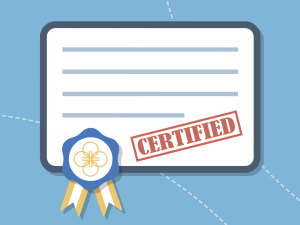
There are increasing numbers of organizations, who prefer candidates those who have certain certifications from recognized programs. Certification demonstrates your commitment to superior professionalism, upholding industry standards, and continued learning. These merits can help boost your professional credibility and prestige within your own network, in your organisation, with your current clients, and when pursuing new business opportunities. After the successful completion of the course and final exam, you will be awarded with a certificate of completion issued by QGlobal. Your credentials will be made available in the global online directory and can be verified by anyone searching with the certificate number. Without doubt we can say that our training courses are well recognized and sought after by organizations across various geographies.
Sample Certificate

Buy for group Are you planning to buy this course for a group? We have the best prices for you! Select ‘Buy for Group’ option and add to the cart. You will get a discount of 60 – 75% for a group of up to 10 participants. To make a group purchase, create your group name and add individual emails of up to 10 participants. Each participant will get the access to the course materials, exam and the certificate. We will arrange one live-online session for the entire group.
Total: 224 Courses View all
Course Description Welcome to QGlobal Academy! Our ISO 17020:2026 Lead Implementer Course is a comprehensive training program designed to equip par...
$120
$90



All industries
[/vc_column][/vc_row]
$240
$190



[/vc_column][/vc_row]
$240
$190


[/vc_column][/vc_row]
$350
$290

[/vc_column][/vc_row]
$240
$190



[/vc_column][/vc_row]
$240
$130


[/vc_column][/vc_row]
$240
$190






All industries
[/vc_column][/vc_row]
$240
$190


All industries
Course Description Welcome to QGlobal Academy! The API Specification Q2, 3rd edition lead implementer training is an advanced, practical program de...
$240
$190

Special

All industries
[/vc_column][/vc_row]
$240
$190

[/vc_column][/vc_row]
$240
$190

[/vc_column][/vc_row]
$240
$190



Aerospace Quality
[/vc_column][/vc_row]
$240
$190

[/vc_column][/vc_row]
$240
$190

[/vc_column][/vc_row]
$240
$190

[/vc_column][/vc_row]
$240
$190



[/vc_column][/vc_row]
$240
$190

[/vc_column][/vc_row]
$350
$290

Biotechnology




Awareness training on ISO 55001 standards
-
1
 Introduction to standards and certification
- Purpose of standardization
- Benefits of certification
-
2Introduction to ISO 55001 standards
· ISO 55001 certification
· Process approach
· Plan-Do-Check-Act cycle (PDCA Cycle)
· Risk-based thinking
· Obstacles in implementing the asset management system
· Asset management system principles
-
3Terms and definitions
- Terms related to person or people
- Terms related to organization
- Terms related to activity
- Terms related to process
- Terms related to system
- Terms related to requirement
- Terms related to result
- Terms related to data, information and document
- Terms related to customer
- Terms related to characteristic
- Terms related to determination
- Terms related to action
- Terms related to audit
-
4ISO 55001 Context of the organization
· Understanding the organization and its context
· Understanding the needs and expectations of stake holders
· Determining the scope of the asset management system
· Asset management system
· Asset management decision-making
-
5ISO 55001 Leadership
· Leadership and commitment
· Asset management policy
· Roles, responsibilities and authorities
-
6ISO 55001 Planning
· Actions to address risks and opportunities
· Asset management objectives and planning to achieve them
· Planning of changes
-
7ISO 55001 Support
· Resources
· Competence
· Awareness
· Communication
· Documented information
· Data and information
· Knowledge
-
8ISO 55001 Operation
· Operational planning and control including life cycle management
· Control of change
· Externally provided processes, products, technologies and services
-
9ISO 55001 Performance evaluation
· Monitoring, measurement, analysis and evaluation
· Internal audit
· Management review
-
10ISO 55001 Improvement
· Continual improvement
· Nonconformity and corrective action
· Predictive action

Implementation training on ISO 55001 standards
-
11LI 01 Building the team
-
12LI 02 Conducting gap analysis
-
13LI 03 Preparing implementation plan
-
14LI 04 Creating awareness
-
15LI 05 Training
-
16LI 06 Procuring documents
-
17LI 07 Creating management system manual
-
18LI 08 Creating policies and procedures
-
19LI 09 Creating forms and templates
-
20LI 10 Planning for certification
-
21LI 11 Implementation methodology
- Building the culture
- Plan-Do-Check-Act
-
22LI 12 Role of leadership in implementing the management system
- Leadership concepts
- Role of leaders in implementing the management system
- 12 Characteristics of team leaders and managers
-
23LI 13 Employee motivation and involvement
- Employee wants
- Achieving a motivated workforce
-
24LI 14 Obstacles in implementing the management system
- Inability to manage the change
- No planned review of the system
- Inadequate planning
- Not aligning the goals and matrices
- Poor commitment from top management
- Differences between departments and individuals
- Lack of awareness and not providing continuous training
- Poor documentation
- Inadequate monitoring, measuring and analysis of data and results
- Not paying attention to internal and external customers
- Failure to continually improve
- Failure to motivate and empower employees
Lead auditor training on ISO 55001 standards
-
25Introduction to ISO 19011 Guidelines for auditing management systems
ISO 19011 – Introduction to Auditing Management Systems
Welcome to QGlobal Academy’s ISO 19011 training course. This introductory lesson provides an overview of ISO 19011, the international guidance for auditing management systems. It explains the fundamental principles, methods, and practices required to conduct effective and reliable management system audits.
ISO 19011 provides guidance on managing audit programmes, conducting management system audits, and evaluating the competence of individuals involved in the audit process. It is applicable to organizations conducting internal audits, external audits, and audits of management systems across various industries.
In this lesson, you will learn about the purpose and scope of ISO 19011, the importance of systematic auditing, and the role of auditors in evaluating conformity and management system effectiveness. You will also gain an overview of audit principles, risk-based auditing, audit programme management, audit activities, and auditor competence.
Topics covered:
Introduction to ISO 19011 and its purpose
Scope and application of the auditing guidelines
- Types of audits: first-party, second-party, and third-party
By completing this lesson, learners will develop a foundational understanding of management system auditing and the guidance provided by ISO 19011 for planning, conducting, reporting, and improving audit activities.
This lesson is suitable for internal auditors, lead auditors, quality managers, management representatives, compliance professionals, consultants, and individuals preparing for management system auditing roles.
Enhance your auditing knowledge with QGlobal Academy’s professional ISO training courses.
-
26ISO 19011 Principles of auditing
This lesson explains the fundamental principles of auditing defined in ISO 19011:2026, which ensure audits are credible, objective, and reliable. It covers key principles such as integrity, fair presentation, due professional care, confidentiality, independence, and evidence-based approach, along with the risk-based approach to auditing. Learners understand how these principles guide auditor behavior, decision-making, and audit outcomes, forming the foundation for conducting effective and trustworthy management system audits.
-
27ISO 19011 Managing an audit program
This lesson introduces how to establish, implement, monitor, and improve an audit programme in accordance with ISO 19011.
It explains the need to align the programme with organizational objectives, risks, and priorities, and covers key aspects such as defining scope, assigning responsibilities, allocating resources, and scheduling audits. The lesson also highlights the importance of monitoring performance, evaluating effectiveness, and driving continual improvement, ensuring the audit programme remains efficient, risk-based, and value-adding.
-
28ISO 19011 Conducting an audit
This lesson explains the process of planning and carrying out an audit in line with ISO 19011 standard. It covers key stages such as initiating the audit, preparing audit plans, conducting audit activities, collecting and verifying evidence, and communicating findings. The lesson also emphasizes effective interaction with the auditee, use of appropriate audit methods (including remote auditing), and maintaining objectivity throughout the audit. Learners gain an understanding of how to ensure audits are systematic, evidence-based, and result-oriented.
Topics covered are:
- Initiating audit
- Establishing contact with auditee
- Determining feasibility of audit
- Preparing audit activities
- Performing review of documented information
- Audit planning
- Assigning work to audit team
- Preparing documented information for audit
- Conducting audit activities
- Assigning roles and responsibilities of guides and observers
- Conducting opening meeting
- Communicating during audit
- Audit information availability and access
- Reviewing documented information while conducting audit
- Collecting and verifying information
- Generating audit findings
- Determining audit conclusions
- Conducting closing meeting
- Preparing and distributing audit report
- Preparing audit report
- Distributing audit report
- Completing audit
- Conducting audit follow-up
-
29ISO 19011 Auditor Competence
This lesson explains the competence requirements for auditors as defined in ISO 19011. It covers the necessary knowledge, skills, and personal attributes required to perform effective audits, including understanding of management system standards, audit principles, and industry-specific processes. The lesson also addresses evaluation of auditor competence, ongoing development, and maintaining proficiency, ensuring auditors can conduct audits that are credible, consistent, and value-adding.
Topics covered are:
- Determining auditor competence
- Personal behavior
- Knowledge and skills
- Achieving auditor competence
- Achieving audit team leader competence
- Establishing auditor evaluation criteria
- Selecting appropriate auditor evaluation method
- Conducting auditor evaluation
- Maintaining and improving auditor competence
Evaluation - ISO 55001 2024 - Lead Auditor Course
-
30ISO 19011 Auditor training practice questions
ISO 19011 Auditor Training – Practice Questions
Test your knowledge of ISO 19011 auditing guidelines through practice questions covering audit principles, audit planning, risk-based auditing, objective evidence, audit findings, auditor competence, and audit reporting. This lesson helps learners assess their understanding of management system auditing concepts and prepare for internal auditor and lead auditor training assessments.
-
31Practice Questions - ISO 55001 auditor trainingExam duration is 60 minutesAll questions carry 1 mark eachSelect only the most appropriate answerMinimum pass mark is 50%

Course details
Duration
40 h
Lectures
30
Quizzes
1
Level
Beginner
Popular courses