
ISO 9001 2015, ISO 14001 2015 & ISO 45001 2018 Integrated Management Systems (QHSE) - Lead Auditor Course

Instructor
QGLOBAL ACADEMY
1,654
Students
enrolled
- Description
- Curriculum

The ISO 9001 standards provide guidance and tools for organizations who want to make sure that their products and services consistently meet customer’s requirements, and that quality is consistently improved. ISO 9001 standards sets out the criteria for a quality management system and is the only standard in the family that can be certified to (although this is not a requirement). It can be used by any organization, large or small, regardless of its field of activity. ISO 14001 2015 environmental management systems (EMS) specify the requirements for an environmental management system that an organization can use to enhance its environmental performance. ISO 14001 is intended for use by an organization seeking to manage its environmental responsibilities in a systematic manner that contributes to the environmental pillar of sustainability. ISO 14001 helps an organization achieve the intended outcomes of its environmental management system, which provide value for the environment, the organization itself and interested parties. ISO 45001 2018 occupational health and safety management systems will help organizations to improve employee safety, reduce workplace risks and create better, safer working conditions. By implementing ISO 45001 standard, the burden of occupational injuries and diseases such as losses from early retirements, staff absence and rising insurance premiums can be significantly reduced. ISO 45001 takes into account other International Standards in this area such as OHSAS 18001, the International Labour Organization’s ILO-OSH Guidelines, various national standards and the ILO’s international labour standards and conventions. ISO 45001 is applicable to all organizations, regardless of size, industry or nature of business. It is designed to be integrated into an organization’s existing management processes. This lead auditor training course on the integrated management system based in ISO 9001 2015, ISO 14001 2015 and ISO 45001 2018 standards will help you learn how to initiate an audit, prepare and conduct audit activities, compile and distribute audit reports and complete follow-up activities. On successful completion of this course, you will be able to optimize your auditing skills with the internationally recognized ISO 9001 2015, ISO 14001 2015 and ISO 45001 2018 standards and boost your audit capabilities. Also gain confidence in planning and performing an effective audit, as well as reporting and taking corrective action where necessary. This lead auditor course develops the necessary skills to assess and report on the conformance and implementation of processes based on the requirements of ISO 9001 2015, ISO 14001 2015 and ISO 45001 2018 standards.
Who Should Attend?
- Anyone involved in the planning, implementing, maintaining, supervising or auditing of a management system based on ISO 9001 2015, ISO 14001 2015 and ISO 45001 2018 standards
- Existing internal auditors
- Employees of any organisation who wish to audit their organisation’s quality and occupational health and safety management system
- Trainers, managers or consultants seeking to master quality and occupational health and safety management system audit process
- Personnel who wish to pursue career as a lead auditor
- Expert advisors in quality and occupational health and safety management system
Key Benefits
- Develop the career as an integrated management system lead auditor
- Gain the skills to plan, conduct, report and follow up first, second and third party audits in accordance with ISO 19011
- Learn skills to lead an audit team
- Identify the aims and benefits of an integrated management system audit
- Interpret the requirements of ISO 9001 2015, ISO 14001 2015 and ISO 45001 2018 standards for audit application
- Grasp the application of risk-based thinking, leadership and process management
- Acknowledge the correlation between ISO 9001 2015, ISO 14001 2015 and ISO 45001 2018 standards, other standards and regulatory frameworks
- Learn the latest techniques in internal auditing
- Consolidate your expertise with the latest developments and contribute to the continuous improvement of the business
- Fill gaps in your professional knowledge
Learning & Evaluation Method
This is a live and interactive course. Once you purchase the course, our team will contact you to plan the training. No matter where you are located, we schedule the classes based on your convenience and time zone. You can plan to attend the training in sessions of 4 or 8 hr duration, based on how much time you can spend in a day.
Certification
There are increasing numbers of organizations, who prefer candidates those who have completed management system trainings from a recognized institution. Certification demonstrates your commitment to superior professionalism, upholding industry standards, and continued learning. These merits can help boost your professional credibility and prestige within your own network, in your organisation, with your current clients, and when pursuing new business opportunities. After the successful completion of the course and final exam, you will be awarded with a certificate of completion issued by QGlobal. Your credentials will be made available in the global online directory and can be verified by anyone searching with the certificate number. Without doubt we can say that our training courses are well recognized and sought after by organizations across various geographies.
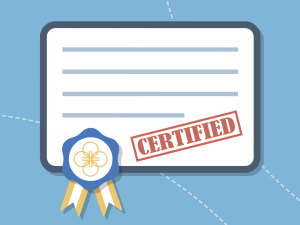
Sample Certificate

Buy for group Are you planning to buy this course for a group? We have the best prices for you! Select ‘Buy for Group’ option and add to the cart. You will get a discount of 60 – 75% for a group of up to 10 participants. To make a group purchase, create your group name and add individual emails of up to 10 participants. Each participant will get the access to the course materials, exam and the certificate. We will arrange one live-online session for the entire group.
Total: 226 Courses View all
Course Description Welcome to QGlobal Academy! Our ISO 17020:2026 Lead Implementer Course is a comprehensive training program designed to equip par...
$120
$90



All industries
[/vc_column][/vc_row]
$240
$190



[/vc_column][/vc_row]
$240
$190


[/vc_column][/vc_row]
$350
$290

[/vc_column][/vc_row]
$240
$190



[/vc_column][/vc_row]
$240
$130


[/vc_column][/vc_row]
$240
$190






All industries
[/vc_column][/vc_row]
$240
$190


All industries
Course Description Welcome to QGlobal Academy! The API Specification Q2, 3rd edition lead implementer training is an advanced, practical program de...
$240
$190

Special

All industries
[/vc_column][/vc_row]
$240
$190

[/vc_column][/vc_row]
$240
$190

[/vc_column][/vc_row]
$240
$190



Aerospace Quality
[/vc_column][/vc_row]
$240
$190

[/vc_column][/vc_row]
$240
$190

[/vc_column][/vc_row]
$240
$190

[/vc_column][/vc_row]
$240
$190



[/vc_column][/vc_row]
$240
$190

[/vc_column][/vc_row]
$350
$290

Biotechnology




Total: 226 Courses View all
Course Description Welcome to QGlobal Academy! Our ISO 17020:2026 Lead Implementer Course is a comprehensive training program designed to equip par...
$120
$90
All industries
[/vc_column][/vc_row]
$240
$190
[/vc_column][/vc_row]
$240
$190
[/vc_column][/vc_row]
$350
$290
[/vc_column][/vc_row]
$240
$190
[/vc_column][/vc_row]
$240
$130
[/vc_column][/vc_row]
$240
$190
All industries
[/vc_column][/vc_row]
$240
$190
All industries
Course Description Welcome to QGlobal Academy! The API Specification Q2, 3rd edition lead implementer training is an advanced, practical program de...
$240
$190
Special
All industries
[/vc_column][/vc_row]
$240
$190
[/vc_column][/vc_row]
$240
$190
[/vc_column][/vc_row]
$240
$190
Aerospace Quality
[/vc_column][/vc_row]
$240
$190
[/vc_column][/vc_row]
$240
$190
[/vc_column][/vc_row]
$240
$190
[/vc_column][/vc_row]
$240
$190
[/vc_column][/vc_row]
$240
$190
[/vc_column][/vc_row]
$350
$290
Biotechnology
Awareness training on QHSE standards
-
1
 Introduction to standards and certification
- Purpose of standardization
- Benefits of certification
-
2Introduction to ISO 9001 2015 standards
Application areas
Terms and definitions
Quality management principles
Process based approach
Plan-Do-Check-Act cycle
Risk based thinking
Benefits of certification
Certification process flow
-
3Quality management system principles
- Fundamental concepts
- Quality management system principles
-
4Introduction to ISO 14001 standards
This lesson introduces the fundamentals of ISO 14001, explaining the purpose, scope, principles, and key requirements of an Environmental Management System (EMS). It provides an overview of certification process and terms and definitions as well.
-
5Introduction to ISO 45001 2018 standards
-
6IMS 91445 Context of the organization
- Understanding the organization and its context
- Understanding the needs and expectations of workers and interested parties
- Determining the scope of the quality , environmental , OH&S management system
- Quality , environmental OH&S management system and its processes
-
7IMS 91445 Leadership
- Leadership and commitment
- Customer focus
- Policy
- Establishing the quality , environmental ,OH&S policy
- Communicating the quality , environmental , OH&S policy
- Organizational roles, responsibilities and authorities
-
8IMS 91445 Planning
- Actions to address risks and opportunities
- Planning of changes
- Environmental aspects
- Quality , environmental , OH&S objectives and planning to achieve them
-
9IMS 91445 Support
- Resources
- People
- Infrastructure
- Environment for the operation of processes
- Monitoring and measuring resources
- Organizational knowledge
- Competence
- Awareness
- Communication
- Documented information
- Creating and updating
- Control of documented information
-
10IMS 91445 Operation
- Operational planning and control
- Requirements for products and services
- Customer communication
- Determining the requirements for products and services
- Review of the requirements for products and services
- Changes to requirements for products and services
- Design and development of products and services
- Design and development planning
- Design and development inputs
- Design and development controls
- Design and development outputs
- Design and development changes
- Control of externally provided processes, products and services
- Type and extent of control
- Information for external providers
- Production and service provision
- Control of production and service provision
- Identification and traceability
- Property belonging to customers or external providers
- Preservation
- Post‐delivery activities
- Control of changes
- Release of products and services
- Control of nonconforming outputs
- Emergency preparedness and response
-
11IMS 91445 Performance evaluation
- Monitoring, measurement, analysis and evaluation
- Customer satisfaction
- Analysis and evaluation
- Internal audit
- Management review
- Management review inputs
- Management review outputs
-
12IMS 91445 Improvement
- Incident, Nonconformity and corrective action
- Continual improvement

Awareness training on HSE practices
-
13EMS - Introduction to aspect impact analysis
-
14EMS - Identifying the environmental aspects
-
15EMS - Lifecycle perspective
-
16HSE - Chemical safety
-
17HSE - Waste management
-
18HSE - Storing and stacking
-
19HSE - Noise
-
20EMS - Minimizing resource consumption
-
21OHS - Introduction to hazard identification and risk analysis
-
22OHS - Working at height
-
23OHS - Confined space
-
24HSE - Safety of pressure vessels
-
25HSE - Material handling
-
26HSE - Vehicle management
-
27HSE - Equipment safety
-
28HSE - Electrical safety
-
29HSE - Hot work
-
30HSE - Gas safety
-
31HSE - Facility management
-
32OHS - Safety of visitors and contractors
-
33HSE - Safety of working tools
-
34OHS - Permit to work
-
35OHS - First aid
-
36OHS - Personal hygiene
-
37HSE - Personal protective equipment (PPEs)
Implementing QHSE management system
-
38LI - 01 Building the team
-
39LI - 02 Conducting gap analysis
-
40LI - 03 Preparing implementation plan
-
41LI - 04 Creating awareness
-
42LI - 05 Training
-
43LI - 06 Procuring documents
-
44LI - 07 Creating management system manual
-
45LI - 08 Creating policies and procedures
-
46LI - 09 Creating forms and templates
-
47LI - 10 Planning for certification
-
48LI - 11 Implementation methodology
- Building the culture
- Plan-Do-Check-Act
-
49LI - 12 Role of leadership in implementing the management system
- Leadership concepts
- Role of leaders in implementing the management system
- 12 Characteristics of team leaders and managers
-
50LI - 13 Employee motivation and involvement
- Employee wants
- Achieving a motivated workforce
-
51LI - 14 Obstacles in implementing the management system
- Inability to manage the change
- No planned review of the system
- Inadequate planning
- Not aligning the goals and matrices
- Poor commitment from top management
- Differences between departments and individuals
- Lack of awareness and not providing continuous training
- Poor documentation
- Inadequate monitoring, measuring and analysis of data and results
- Not paying attention to internal and external customers
- Failure to continually improve
- Failure to motivate and empower employees
Auditing QHSE management system
-
52Introduction to ISO 19011 Guidelines for auditing management systems
ISO 19011 – Introduction to Auditing Management Systems
Welcome to QGlobal Academy’s ISO 19011 training course. This introductory lesson provides an overview of ISO 19011, the international guidance for auditing management systems. It explains the fundamental principles, methods, and practices required to conduct effective and reliable management system audits.
ISO 19011 provides guidance on managing audit programmes, conducting management system audits, and evaluating the competence of individuals involved in the audit process. It is applicable to organizations conducting internal audits, external audits, and audits of management systems across various industries.
In this lesson, you will learn about the purpose and scope of ISO 19011, the importance of systematic auditing, and the role of auditors in evaluating conformity and management system effectiveness. You will also gain an overview of audit principles, risk-based auditing, audit programme management, audit activities, and auditor competence.
Topics covered:
Introduction to ISO 19011 and its purpose
Scope and application of the auditing guidelines
- Types of audits: first-party, second-party, and third-party
By completing this lesson, learners will develop a foundational understanding of management system auditing and the guidance provided by ISO 19011 for planning, conducting, reporting, and improving audit activities.
This lesson is suitable for internal auditors, lead auditors, quality managers, management representatives, compliance professionals, consultants, and individuals preparing for management system auditing roles.
Enhance your auditing knowledge with QGlobal Academy’s professional ISO training courses.
-
53ISO 19011 Principles of auditing
This lesson explains the fundamental principles of auditing defined in ISO 19011:2026, which ensure audits are credible, objective, and reliable. It covers key principles such as integrity, fair presentation, due professional care, confidentiality, independence, and evidence-based approach, along with the risk-based approach to auditing. Learners understand how these principles guide auditor behavior, decision-making, and audit outcomes, forming the foundation for conducting effective and trustworthy management system audits.
-
54ISO 19011 Managing an audit program
This lesson introduces how to establish, implement, monitor, and improve an audit programme in accordance with ISO 19011.
It explains the need to align the programme with organizational objectives, risks, and priorities, and covers key aspects such as defining scope, assigning responsibilities, allocating resources, and scheduling audits. The lesson also highlights the importance of monitoring performance, evaluating effectiveness, and driving continual improvement, ensuring the audit programme remains efficient, risk-based, and value-adding.
-
55ISO 19011 Conducting an audit
This lesson explains the process of planning and carrying out an audit in line with ISO 19011 standard. It covers key stages such as initiating the audit, preparing audit plans, conducting audit activities, collecting and verifying evidence, and communicating findings. The lesson also emphasizes effective interaction with the auditee, use of appropriate audit methods (including remote auditing), and maintaining objectivity throughout the audit. Learners gain an understanding of how to ensure audits are systematic, evidence-based, and result-oriented.
Topics covered are:
- Initiating audit
- Establishing contact with auditee
- Determining feasibility of audit
- Preparing audit activities
- Performing review of documented information
- Audit planning
- Assigning work to audit team
- Preparing documented information for audit
- Conducting audit activities
- Assigning roles and responsibilities of guides and observers
- Conducting opening meeting
- Communicating during audit
- Audit information availability and access
- Reviewing documented information while conducting audit
- Collecting and verifying information
- Generating audit findings
- Determining audit conclusions
- Conducting closing meeting
- Preparing and distributing audit report
- Preparing audit report
- Distributing audit report
- Completing audit
- Conducting audit follow-up
-
56ISO 19011 Auditor Competence
This lesson explains the competence requirements for auditors as defined in ISO 19011. It covers the necessary knowledge, skills, and personal attributes required to perform effective audits, including understanding of management system standards, audit principles, and industry-specific processes. The lesson also addresses evaluation of auditor competence, ongoing development, and maintaining proficiency, ensuring auditors can conduct audits that are credible, consistent, and value-adding.
Topics covered are:
- Determining auditor competence
- Personal behavior
- Knowledge and skills
- Achieving auditor competence
- Achieving audit team leader competence
- Establishing auditor evaluation criteria
- Selecting appropriate auditor evaluation method
- Conducting auditor evaluation
- Maintaining and improving auditor competence
Final exam - QHSE Lead auditor course

Course details
Duration
32 hr
Lectures
58
Quizzes
1
Level
Beginner
Popular courses